&w=3840&q=80)

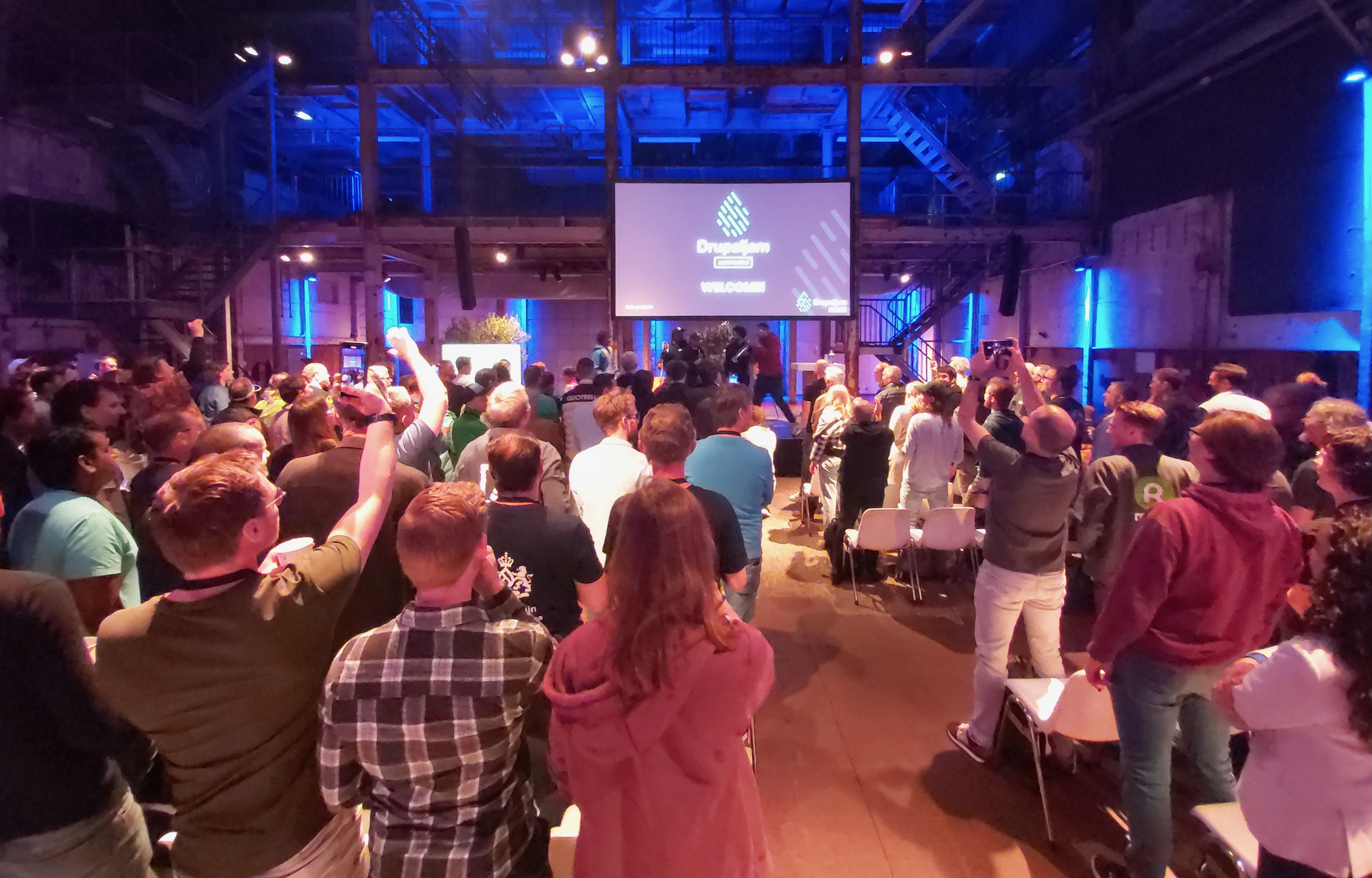
Last week the Drupal community celebrated an important milestone. Specifically, January 15 marked the 25th anniversary of when Drupal founder Dries Buytaert publicly released the first version of the platform. Beginning as a personal hobby project, Drupal has now grown into one of the leading open source content management platforms over the past quarter of a century.
To Agiledrop, Drupal has been a defining element of our journey and our culture. Our name is literally a combination of “agile” together with “drop”, standing for Drupal based on Dries’s typo of the Dutch word “dorp” (“village”). This story has become quite famous in the Drupal community, and with good reason, as it is a great testament to the power of spontaneity.
Agiledrop’s founders first started working with Drupal in 2008, five years before our company’s official foundation in 2013. Since our founders have been instrumental in defining our company culture, this effectively makes us part of the Drupal community for 17 out of its 25 years.
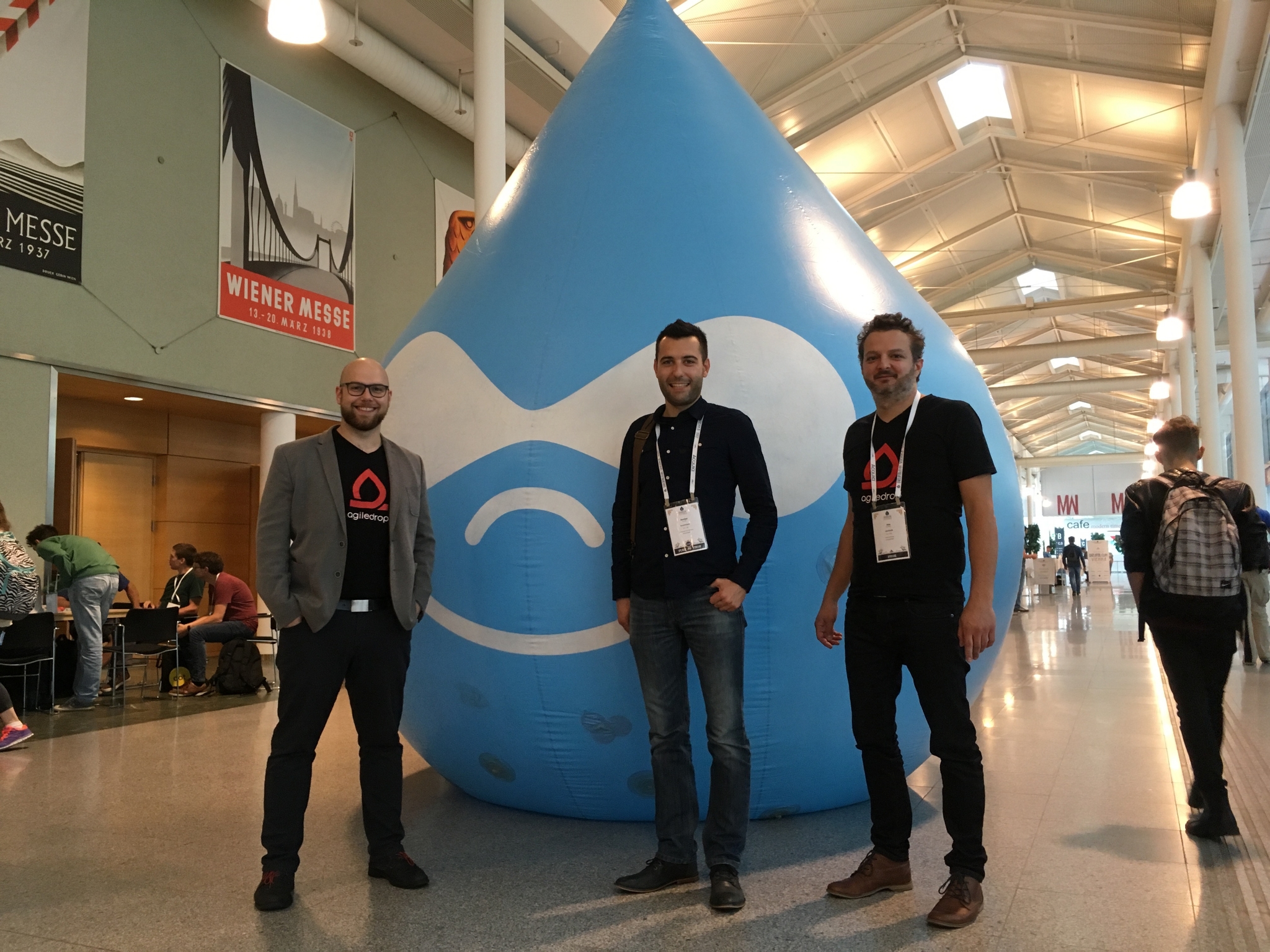
During that time, we’ve witnessed Drupal evolve from an already powerful platform into a system capable of reliably supporting the most advanced web platforms for a variety of top sectors and industries. Thanks to recent innovations and initiatives such as the Starshot and Drupal AI initiatives bringing significant momentum, the Drupal space is ripe with opportunity.
A long-standing slogan of Drupal’s has been “come for the code, stay for the community”. Indeed, Drupal’s active community has been one of the key factors in first establishing and then maintaining its status as an open source content management powerhouse. Drupal owes much of its success to the countless passionate individuals investing their time and energy into making it what it is today.
This sustained success of Drupal’s is not a fluke. Many of the platform’s core features and principles have made it a perfect fit for the digital infrastructure of numerous government institutions, nonprofits, universities, enterprises and media companies across the world. Drupal’s key strengths include:
- Robust, secure and scalable
- Endlessly customizable, with facilitated integrations thanks to Drupal’s API-first architecture
- Advanced content and website management capabilities: streamlined workflows, thoroughly defined system for user roles & permissions, easy multisite management, automation with AI agents
- Accessibility prioritized, with a11y features such as alternative text generation for images enabled by default
- Support for multilingual capabilities, additionally optimized with AI translation features
- UX improvements such as responsive images and other image optimization features
On top of these long-standing Drupal strengths, many of the project’s recent innovations are positioning it even more strongl as an industry leader. Just in this past year, we’ve had several milestone releases and initiatives:
- The release of the new Drupal CMS, a product of the Starshot initiative
- The release of the new visual page builder Drupal Canvas
- The launch of the Drupal AI initiative to unlock AI innovation in Drupal
These and other novelties such as Recipes and Site Templates are all playing a major role in making Drupal more accessible and user-friendly to newcomers. In particular, the Easy out of the box initiative was conceptualized to address Drupal’s infamously steep learning curve, with the goal of bringing Drupal closer to newer generations of developers and other technology enthusiasts.
Of course, it’s not only recent decisions that make Drupal so perfectly positioned. As Dries pointed out in a few of his recent articles, certain architectural decisions throughout Drupal’s history have been instrumental in its sustainability and viability. While representing a painful upgrade for a lot of users at the time, the release of Drupal 8 was based on decisions that are now paying significant dividends over a decade later.
Finally, we want to highlight some additional unique features of Drupal that have made it stand out among its competitors and established it as a powerful, future-proof platform. Dries Buytaert’s savvy leadership has no doubt played a major role in Drupal’s success, with his status as BDFL (benevolent dictator for life) ensuring the Drupal ship is steered in the right direction all while the actual steering was done by the community.
Drupal’s decisive support of the open web also showcases its commitment to making the digital landscape safer and more inclusive for everyone in it. It’s also one of the major reasons why Drupal is so widely used for government infrastructure, especially that of the EU, given that Europe is starting to prioritize open solutions for digital sovereignty.
What makes Drupal truly stand out among open source software projects is its unique contribution credit system, which provides a very high degree of flexibility in assigning contribution credit, also allowing to assign credit for non-code contributions such as teaching, marketing and event organization.
Drupal’s contribution credit system as well as key infrastructure decisions, such as the move to GitLab and adoption of GitLab CI, could serve to set an important standard for other open source projects.
Conclusion
Despite its technological prowess, Drupal is essentially a software project built by the community for the community. As stated, the strength of the Drupal community is one of the platform’s biggest success factors. But it’s more than just that.
Drupal’s spirit of collaboration is lived out in every aspect of the community. At Agiledrop, we’ve formed countless invaluable memories and friendships through DrupalCons and other Drupal events, as well as participating in initiatives such as Promote Drupal.
A quarter of a century after its humble beginnings, Drupal is stronger than ever and perfectly set up for continued success in the future. Here’s to (at least) 25 more years!